Growth Guidance
Proactive care for developing smiles.
The American Association of Orthodontists recommends every child see an orthodontist by age 7.
Why so early? Because at this age, we have a unique opportunity: Growth.
While most children will not need braces until all their permanent teeth erupt (age 11-13), a subset of children face skeletal or developmental issues that must be corrected while the jaw is still growing. This is called Phase 1 Interceptive Treatment.
Signals of Imbalance
Parents often ask what to look for. It is not always about crooked teeth; often, the signs are functional.
Visual Guide: Common Issues
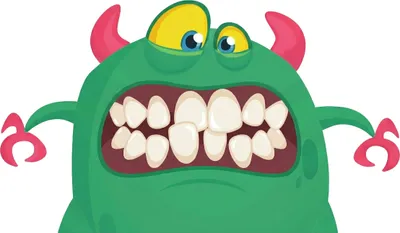
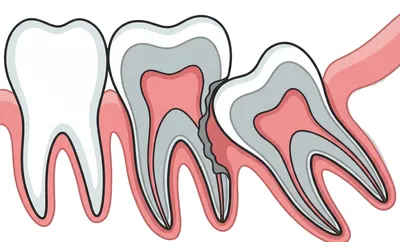
These "Monsters" represent the most common growth patterns we look for at age 7.







Pediatric Dentist vs. Orthodontist
Many parents search for a “pediatric orthodontist” when they notice these issues. It is important to understand the difference in roles.
- Your Pediatric Dentist: Protects the health of the teeth (cavities, hygiene, gum health).
- The Orthodontist: Engineers the structure of the jaw and the alignment of the bite.
We work closely with your pediatric dentist. While they ensure the house is clean and painted, we ensure the foundation is level and the walls are straight. If you notice structural issues like crossbites or crowding, you do not need a referral to see us.
When to Act
If you notice these patterns, an exam is warranted regardless of age.
📐 Structural Issues
The Crossbite: If the upper jaw is too narrow, the lower jaw may shift to one side to close, leading to permanent asymmetry.
Protrusion: Upper teeth that flare forward (“Buck Teeth”) are in the “Trauma Zone”—highly susceptible to breaking during play or sports.
🌬️ Functional Habits
Mouth Breathing: A narrow palate often restricts the nasal airway. Expansion can improve sleep quality and focus. Thumb Sucking: If this persists past age 5, it can deform the roof of the mouth and push teeth forward.
🦷 Eruption Patterns
Early/Late Loss: Baby teeth falling out too soon (due to decay) or hanging on too long can trap adult teeth. Crowding: If adult teeth are erupting sideways or blocked out completely, we need to create space immediately.
🗣️ Speech & Eating
Speech Impediments: Lisping or difficulty pronouncing sounds can indicate tongue thrusting or poor tongue posture.
Chewing Difficulty: If your child shifts their jaw to chew or bites their cheek frequently, the bite architecture is misaligned.
The Two-Phase Protocol
If we identify a skeletal issue, we do not simply put braces on and wait 5 years. We utilize a strategic Two-Phase approach to minimize time in treatment.
Phase 1: The Foundation (12-18 Months)
The goal here is Skeletal Engineering. We use expanders or limited kids braces to widen the jaw, correct crossbites, and ensure the airway is open. We are preparing the “construction site” so the house can be built correctly.
The Resting Period
This is critical. Once the jaw size is corrected, we stop. We remove all appliances and allow the remaining permanent teeth to erupt naturally into the newly created space.
- Validation: We monitor eruption every 6 months.
- Freedom: We let nature do the work. Often, the permanent teeth will drift into perfect position on their own, simplifying future treatment.
Phase 2: The Refinement (Teen Years)
Once all adult teeth have arrived (usually age 12+), we begin the final alignment. Because we did the heavy lifting in Phase 1, this phase is often shorter, easier, and avoids the need for permanent tooth extractions or jaw surgery.
The Monstagrin™ Club
If your child visits us and doesn’t need treatment yet (which is true for most 7-year-olds), they join our Growth Guidance Program.
We know that “going to the doctor” can be scary. That is why we make it fun.
Where Anxiety Goes Extinct
Video games, monthly contests, and the famous Prize Wheel. Discover the secret club that makes kids actually ask to go to the orthodontist.
Enter the Clubhouse- Free Monitoring: We see them every 6-12 months to track eruption and growth.
- Zero Cost: These observation appointments are complimentary.
- Peace of Mind: You will know exactly if and when treatment is needed, avoiding missed windows of opportunity.
Protect their future.
A screening now can prevent complex problems later. Give them the gift of a solid foundation.